
Advances in the Search for an HIV Cure, Promising Breakthroughs in 2025
As 2025 draws to a close, the global effort to find a cure for HIV has seen remarkable progress.
Kyllo
12/29/2025
Advances in the Search for an HIV Cure: Promising Breakthroughs in 2025
As 2025 draws to a close, the global effort to find a cure for HIV has seen remarkable progress. While antiretroviral therapy (ART) has transformed HIV into a manageable chronic condition for millions, allowing people to live long, healthy lives with undetectable viral loads, a true cure—either sterilizing (complete eradication) or functional (long-term remission without medication)—remains the ultimate goal. This year brought encouraging advances in immunotherapy, gene editing, stem cell transplants, and antibody-based strategies, offering renewed hope for the 40 million people living with HIV worldwide.
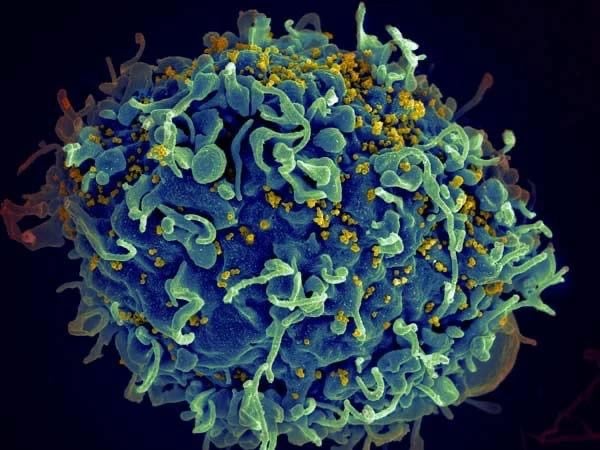
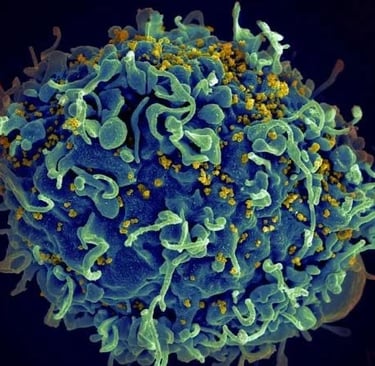
Electron microscope images of HIV virions budding from an infected cell (left) and clustered particles (right), illustrating the virus’s structure that researchers are targeting.
Immunotherapy Combinations Show Long-Term Viral Control
One of the most exciting developments came from UC San Francisco researchers in December 2025. In a small clinical trial, a triple combination of experimental immunotherapies enabled 7 out of 10 participants to maintain low HIV levels for months after stopping ART. One individual sustained control for over 18 months. This “post-treatment control” suggests the therapy reprograms the immune system to suppress the virus independently, a key step toward a functional cure.
Similar optimism emerged from trials using broadly neutralizing antibodies (bNAbs)—potent antibodies engineered to target multiple HIV strains.
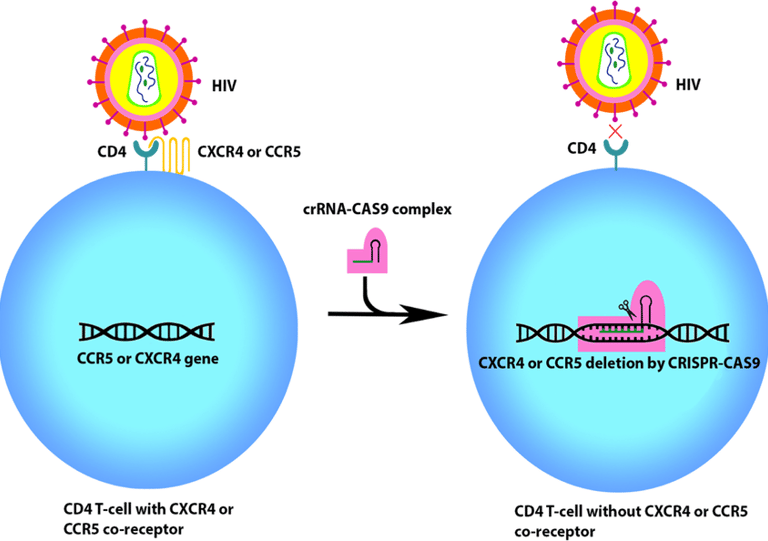
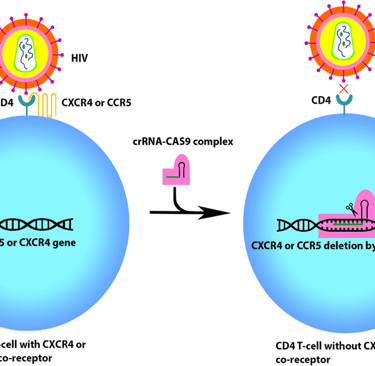
Conceptual illustrations of CRISPR-Cas9 gene editing targeting HIV-integrated DNA in host cells.
American Gene Technologies reported reductions in intact proviral DNA in Phase 1 trials of AGT103-T, a cell therapy enhancing HIV-specific immune responses.
Stem Cell Transplants: Expanding the Path to Cure
Stem cell transplants continued to yield rare cures. In November 2025, Nature published details of a patient achieving sustained remission after a transplant with only heterozygous CCR5Δ32 mutation—challenging the long-held belief that full homozygous mutation was required. This “second Berlin Patient”-like case, along with others presented at CROI 2025 (including Chicago and Oslo patients), suggests immune mechanisms beyond CCR5 resistance can clear reservoirs.
Challenges and the Road Ahead
Despite these advances, hurdles remain: latent reservoirs persist, viral diversity enables escape, and scalable, safe therapies are needed. Funding fluctuations and access inequities also threaten progress. However, experts like Steven Deeks at UCSF emphasize that 2025’s results represent “unprecedented” steps forward.
Projections suggest functional cures could emerge in the next decade, potentially combining bNAbs, gene editing, and latency-reversing agents. As Laurence Rouil of the Copernicus Atmosphere Monitoring Service noted in a different context but aptly here: real progress comes from sustained international collaboration.
In 2025, the HIV cure field moved from aspiration to tangible momentum—a testament to decades of perseverance that could soon free millions from lifelong treatment.
News
Stay updated with the latest news headlines daily.
© 2024. All rights reserved.