
Renewable Energy Will Grow Faster Than Fossil Fuels
In an era defined by climate urgency and technological innovation, the global energy landscape is undergoing a profound transformation.
Kyllo
1/7/2026
Renewable Energy Will Grow Faster Than Fossil Fuels
In an era defined by climate urgency and technological innovation, the global energy landscape is undergoing a profound transformation. Renewable energy sources, such as solar, wind, hydro, and others, are poised to expand at an unprecedented pace, outstripping the growth of traditional fossil fuels like coal, oil, and natural gas. This shift is not just a hopeful aspiration but a data-driven reality, backed by projections from leading organizations. As we look toward 2030 and beyond, renewables are set to dominate new capacity additions, driven by falling costs, policy incentives, and the imperative to reduce greenhouse gas emissions.
Current Trends Signal a Turning Point
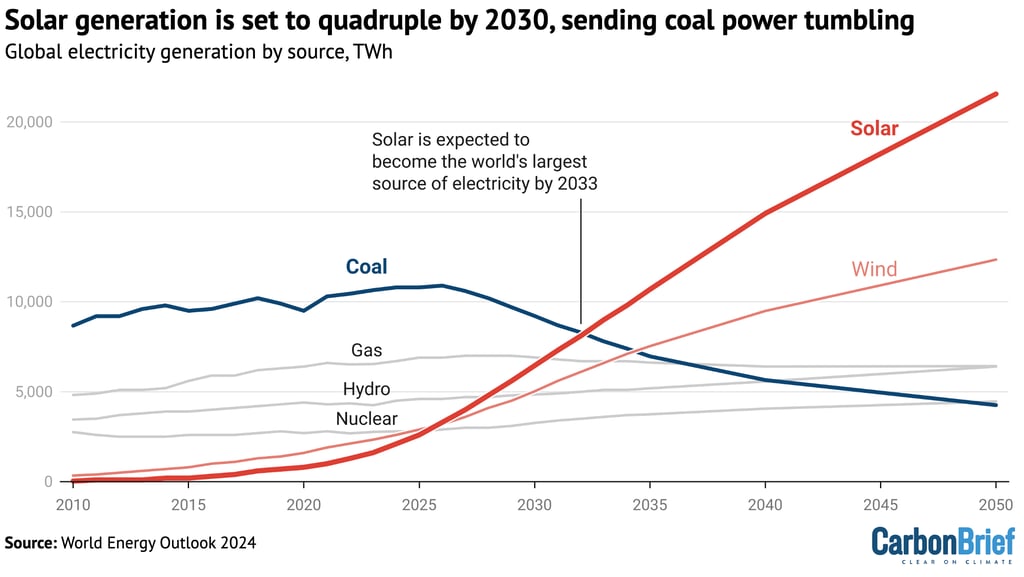
The momentum behind renewables is already evident in recent developments. In the first half of 2025, global electricity demand grew by 2.6%, a rise that was more than covered by increases in solar (up 31%) and wind (up 18%) generation. For the first time, renewables overtook coal as the world’s largest source of electricity in the first half of 2025, marking a historic milestone. This trend underscores how clean energy is not only meeting but exceeding demand growth in many regions, reducing reliance on fossil fuels.
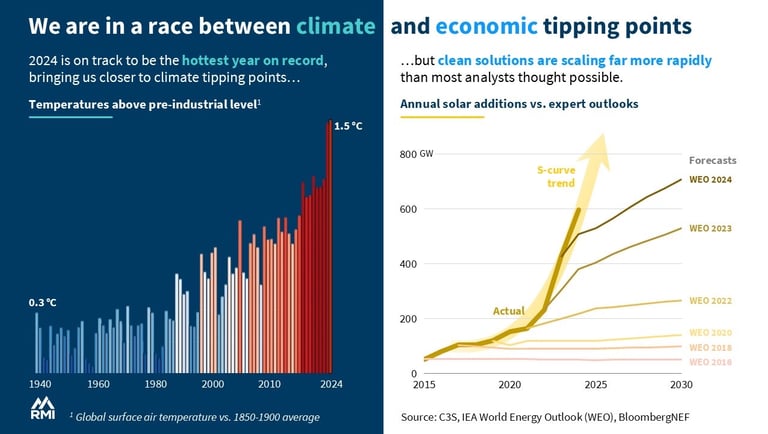
In 2024, global renewable capacity additions reached 582 GW, a record high. Yet, this is just the beginning. Renewables are being deployed faster and cheaper than fossil fuels, creating jobs and delivering affordable power while addressing energy security concerns.
Projections: Explosive Growth for Renewables
Looking ahead, the International Energy Agency (IEA) forecasts that global renewable electricity capacity will surge by 4,600 GW between 2025 and 2030, equivalent to the combined installed power capacity of China, the European Union, and Japan. This represents double the deployment seen in the previous five-year period from 2019 to 2024. Solar photovoltaic (PV) technology will lead the charge, accounting for nearly 80% of this expansion, with its growth more than doubling compared to the prior period. Onshore wind is expected to add 732 GW, a 45% increase over 2019-2024, while offshore wind will more than double its additions to 140 GW.
Renewable electricity generation is projected to jump 60% from 9,900 TWh in 2024 to 16,200 TWh in 2030, making up 43% of global electricity generation, up from 32% today. Renewables are expected to surpass coal as the top source by the end of 2025 and meet over 90% of global electricity demand growth through 2030. The IEA anticipates that renewables will grow much faster in the 2025-2030 period than in the previous five years.
In contrast, fossil fuel demand is approaching a plateau. The IEA’s Stated Policies Scenario (STEPS) indicates that global fossil fuel use will peak before 2030, with clean energy sources like solar surging by 344% and wind by 178% by 2035. McKinsey’s Global Energy Perspective echoes this, projecting that fossil fuel demand will plateau between 2030 and 2035, while retaining a significant share of the energy mix beyond 2050. However, the momentum for renewables and electric vehicles makes a peak in fossil demand highly likely in the coming years.
To achieve ambitious targets like tripling renewable capacity to 11.2 TW by 2030, as agreed at COP28, annual additions must accelerate to 1,122 GW per year from 2025, implying a 16.6% annual growth rate. This would require scaling investments to at least USD 1.4 trillion annually through 2030, more than doubling the USD 624 billion invested in 2024.
Drivers of the Renewable Surge
Several factors are fueling this disparity in growth rates. First, the cost of renewables continues to plummet: solar and wind are now the cheapest sources of new electricity in most markets. Technological advancements, such as improved energy storage and grid integration, are addressing intermittency issues, making renewables more reliable.
Policy support plays a crucial role. Governments worldwide are implementing incentives, subsidies, and regulations to phase out fossils and promote clean energy. For instance, the European Union, India, and China are ramping up deployments, with China alone expected to drive nearly half of global offshore wind growth.
Economic benefits are also compelling. Renewables have already reduced fossil fuel imports for over 100 countries, saving trillions in costs since 2010. They create jobs, millions more than fossils, and enhance energy security by diversifying supply away from volatile oil and gas markets.
Challenges and the Path Forward
Despite the optimistic outlook, hurdles remain. Forecast revisions show a 5% downward adjustment in renewable capacity additions due to policy changes, supply chain issues, and macroeconomic pressures in regions like the US and Europe. Grid infrastructure must expand rapidly to accommodate variable renewables, and investment gaps could slow progress if not addressed.
Fossil fuels won’t disappear overnight; they may still grow modestly in some scenarios, particularly oil until 2050. A “battle” between petro-states and “electro-states” is emerging, with the latter pushing for faster transitions. To stay on track for net-zero goals, the world must accelerate renewable deployment beyond current policies.
The evidence is clear: renewable energy will grow faster than fossil fuels in the years ahead, reshaping our energy systems and paving the way for a sustainable future. With projected additions dwarfing those of fossils and clean sources meeting the bulk of demand growth, this transition promises environmental, economic, and social gains. As global electricity demand rises, expected to increase by 4.5% in 2025 alone, renewables are ready to lead the charge. The window to act is narrow, but the rewards are immense.
News
Stay updated with the latest news headlines daily.
© 2024. All rights reserved.